

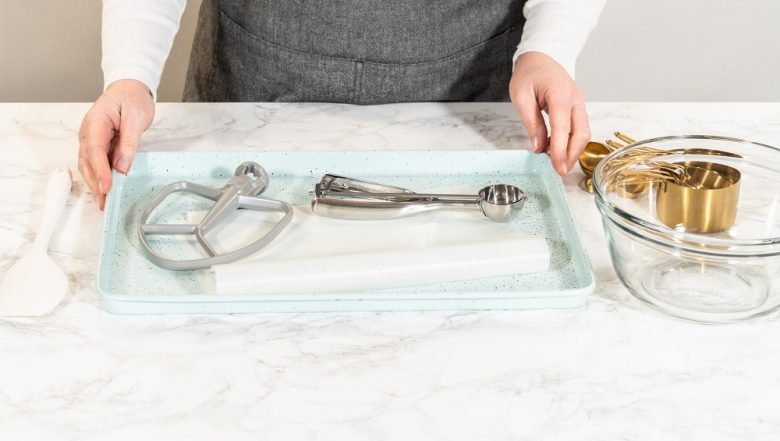
Baking is both a science and an art. For beginners, having the right tools makes the process easier, more precise, and far more enjoyable. While professional bakeries may rely on specialized equipment, beginners only need a handful of reliable tools to create delicious cakes, breads, cookies, and pastries.
Using proper baking tools ensures accurate measurements, consistent textures, and better baking results. Investing in a few essential items can save time, prevent mistakes, and build confidence in the kitchen.
Why the Right Baking Tools Matter
Baking requires precision. Even small measurement errors can affect the final texture or flavor of baked goods. Proper tools help ensure:
- Consistent measurements
- Even mixing of ingredients
- Proper dough shaping and handling
- Uniform baking results
For beginners, these tools simplify the learning process and reduce the chances of failed recipes.
Measuring Cups and Measuring Spoons
Accurate measurement is one of the most important aspects of baking. Measuring cups and spoons help ensure ingredients are added in the correct proportions.
Essential Types
- Dry measuring cups for flour, sugar, and cocoa powder
- Liquid measuring cups for milk, water, and oil
- Measuring spoons for baking powder, vanilla extract, and spices
Why They Are Important
Baking recipes rely heavily on precise measurements. Using regular kitchen cups can lead to inconsistent results.
Mixing Bowls
Every baker needs a set of sturdy mixing bowls for preparing doughs and batters.
Recommended Features
- Different sizes for various recipes
- Durable materials such as stainless steel or glass
- Non-slip bases for stability during mixing
Mixing bowls allow ingredients to be combined efficiently and help keep the workspace organized.
Whisk
A whisk is essential for blending ingredients smoothly and incorporating air into batters.
Common Uses
- Mixing cake batter
- Blending dry ingredients
- Whipping eggs or cream
Whisks help create light and airy textures, especially in cakes and pancakes.
Rubber Spatula
A rubber or silicone spatula is perfect for scraping bowls and folding ingredients.
Benefits
- Flexible and heat resistant
- Prevents batter from going to waste
- Ideal for folding delicate mixtures
Spatulas are particularly useful when working with cake batter, cookie dough, and frosting.
Baking Pans and Trays
Baking pans determine the shape and texture of your baked goods.
Essential Pans for Beginners
- Round cake pans for layer cakes
- Loaf pans for bread and pound cakes
- Baking sheets for cookies and pastries
- Muffin tins for cupcakes and muffins
Choosing high-quality pans helps ensure even heat distribution and prevents burning.
Rolling Pin
A rolling pin is used to flatten dough for cookies, pastries, and pie crusts.
Key Advantages
- Helps achieve uniform dough thickness
- Makes shaping pastry easier
- Improves baking consistency
Beginners often prefer wooden or silicone rolling pins because they are easy to control.
Kitchen Scale
Many professional bakers rely on kitchen scales because weight measurements are more accurate than volume.
Benefits of Using a Scale
- Greater precision in recipes
- Consistent baking results
- Easier scaling of recipes
Using a scale is especially helpful when working with flour, sugar, and chocolate.
Oven Thermometer
Home ovens do not always display the correct temperature. An oven thermometer helps ensure accurate baking conditions.
Why It Matters
- Prevents underbaking or overbaking
- Improves recipe reliability
- Helps maintain consistent results
Even a small temperature difference can affect baking outcomes.
Cooling Rack
Cooling racks allow baked goods to cool properly after coming out of the oven.
Advantages
- Prevents soggy bottoms
- Allows air to circulate around baked goods
- Maintains proper texture
Cooling racks are especially useful for cookies, breads, and cakes.
Pastry Brush
A pastry brush is a simple tool that helps apply liquids evenly to dough or baked goods.
Common Uses
- Brushing egg wash on pastries
- Applying butter or glaze
- Greasing baking pans
This tool helps improve appearance and flavor.
Hand Mixer or Stand Mixer
While not absolutely necessary, mixers make baking much easier for beginners.
Key Benefits
- Saves time and effort
- Ensures consistent mixing
- Ideal for whipping cream, frosting, and dough
A hand mixer is usually enough for beginners, while serious bakers may eventually invest in a stand mixer.
Parchment Paper
Parchment paper is often overlooked but extremely useful.
Benefits
- Prevents baked goods from sticking
- Makes cleanup easier
- Helps cookies bake evenly
It is widely used when baking cookies, pastries, and cakes.
Conclusion
Starting your baking journey does not require a kitchen full of professional equipment. With a few essential tools such as measuring cups, mixing bowls, baking pans, spatulas, and a whisk, beginners can confidently prepare a wide variety of baked goods.
As skills improve, additional tools can be added gradually. The most important thing is to focus on quality, accuracy, and consistency, which these basic tools help achieve.
Frequently Asked Questions (FAQs)
1. Do beginner bakers need expensive baking tools?
No. Many affordable tools work perfectly well for beginners. The key is to choose durable items that provide accurate measurements and even baking.
2. What is the most important baking tool for beginners?
Measuring cups and spoons are among the most important because baking relies heavily on precise ingredient measurements.
3. Can I bake without a mixer?
Yes. Many recipes can be prepared using a whisk or wooden spoon. Mixers simply make the process faster and easier.
4. Is a kitchen scale necessary for baking?
While not mandatory, a kitchen scale provides greater accuracy and helps ensure consistent results, especially in bread and pastry recipes.
5. How many mixing bowls should a beginner have?
A basic set of three bowls in different sizes is usually sufficient for most baking tasks.
6. What type of baking pan is best for beginners?
Non-stick or aluminum baking pans are commonly recommended because they distribute heat evenly and are easy to clean.
7. How do I maintain my baking tools?
Wash tools after each use, dry them thoroughly, and store them properly to prevent rust, damage, or contamination.